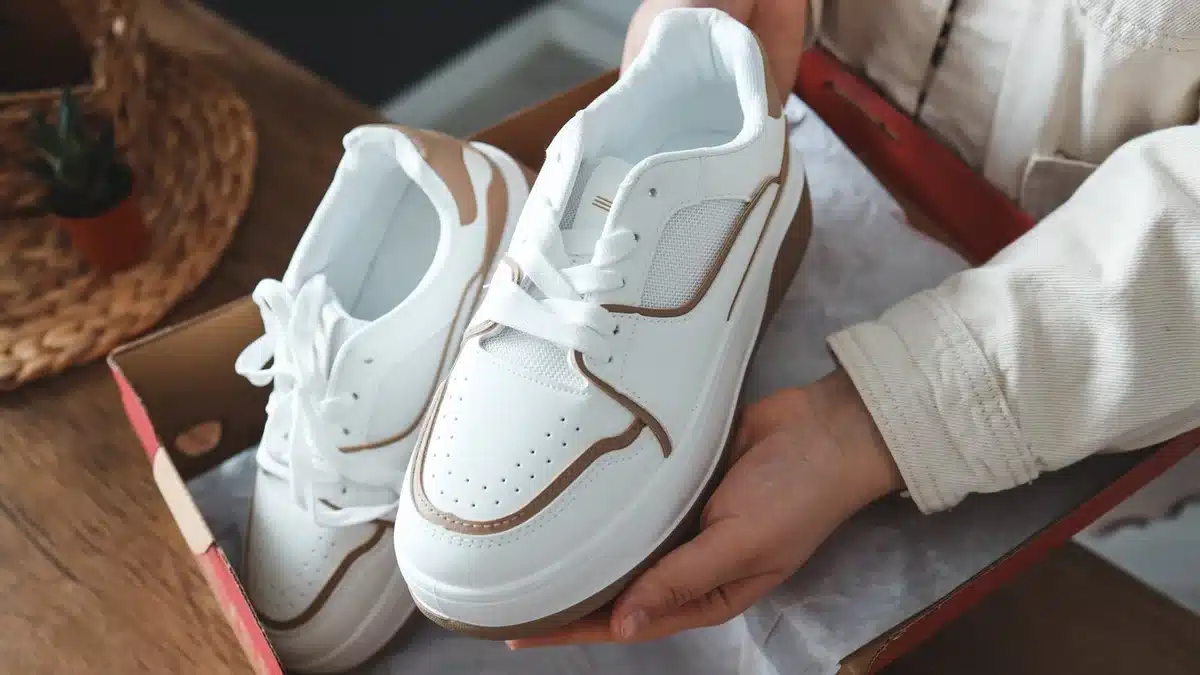
Almond shoes are officially replacing ballet flats as the footwear trend of the season. With their softly elongated, rounded toe and low heel, these vintage-inspired pumps worn by Lady Diana are set to dominate spring and well into 2026. Brands like Mango and Sézanne are already leading the charge.
Ballet flats had a long, beautiful run. Last summer belonged entirely to them, flat and understated, gracing every outfit from casual to dressed-up. But fashion moves fast, and this spring, a new silhouette is quietly taking over: the almond shoe, a low-heeled pump with a toe shape that sits somewhere between round and pointed, like the gentle curve of an almond. Elegant, refined, and deeply nostalgic, it carries with it the unmistakable air of a bygone era.
And not just any era. This shoe is, as the British would say, so British.
Almond shoes have a history rooted in the 1950s
The almond-toe silhouette is not a new invention. It first emerged in the 1950s, a decade defined by structured femininity and polished dressing. The shape was designed to flatter the foot naturally, avoiding the severity of a sharp pointed toe while still offering more elegance than a blunt round toe. The result is a silhouette that elongates the leg without forcing the foot into an uncomfortable position.
Lady Diana's favorite shoe style
Princess Diana was one of the most iconic wearers of this style. She returned to it repeatedly throughout her public life, pairing almond-toe pumps with everything from tailored suits to flowing skirts. Her choices were never accidental. Diana understood instinctively that the almond toe offered a kind of quiet sophistication, flattering without being flashy, polished without being stiff. Looking back at archive photographs, the consistency is striking. This was a shoe she trusted.
That royal connection gives the current revival a particular cultural weight. Wearing almond shoes in spring 2026 is not just following a trend. It is, in some sense, channeling a very specific aesthetic lineage, one that runs from 1950s couture through the most photographed woman of the late twentieth century.
The almond-toe pump originated in the 1950s as a middle ground between the round toe and the pointed stiletto. Its proportions were designed to visually lengthen the foot while remaining comfortable for extended wear.
The almond shoe flatters the silhouette in ways ballet flats simply cannot
There is a practical argument for this shift, beyond pure aesthetics. Ballet flats, for all their charm, tend to visually cut the leg at the ankle. They work beautifully in certain contexts but can shorten the silhouette, particularly when worn with cropped trousers or midi-length skirts. The almond shoe solves this problem with a small heel and a toe that draws the eye forward and downward, creating a continuous, elongating line from the ankle to the tip of the foot.
A comfortable alternative to extreme heels
The low heel is a key part of the appeal. Unlike vertiginous stilettos or aggressively pointed pumps, the almond shoe sits in a comfortable middle ground. The foot is supported, the posture improves slightly with the gentle lift, and there is none of the pinching that comes with an overly narrow toe box. For women who want to look polished without compromising on comfort, this is the answer. It is no coincidence that the low-heel version of the ballet flat has already been gaining traction as a transitional style. The almond shoe takes that logic further.
The shape is also genuinely flattering for a wide range of foot types. The slightly elongated toe creates proportion without distortion, making the foot look refined rather than squeezed.
Metallic versions lead the spring styling conversation
If the almond shoe's silhouette is its foundation, the season's finishes are what make it exciting. Metallic versions are everywhere: gold, silver, and other lustrous treatments that catch the light and elevate even the simplest outfit. A gold almond-toe pump paired with a flowing linen dress needs nothing else. A silver version worn with wide-leg tailored trousers turns a workday outfit into something considered and sharp.
This metallic direction connects naturally to broader spring trends. Just as spring 2026 is seeing bold shifts in other fashion categories, footwear is following suit, moving away from the muted and the minimal toward something with a bit more presence. The almond shoe delivers that presence without resorting to height or drama.
- Elongates the leg and foot silhouette
- More comfortable than pointed or high-heeled styles
- Versatile across casual and formal outfits
- Metallic versions work day to night
- Less casual than ballet flats for everyday wear
- Metallic finishes require more careful outfit coordination
Mango and Sézanne are the brands to watch this season
Knowing the trend is one thing. Finding the right pair is another. Two brands stand out for their almond-toe offerings this season. Mango has positioned itself as a reliable source for trend-forward footwear at accessible price points, and its almond-toe pumps this spring are no exception. The cuts are clean, the finishes include the metallic options that define the season, and the proportions are well-considered.
Sézanne, the French label beloved for its quiet luxury aesthetic, approaches the same silhouette from a slightly more refined angle. Its almond shoes lean into the vintage reference without feeling costume-like, which is exactly the balance this trend requires.
For styling, the formula is straightforward. Fluid dresses, whether in silk, satin, or light cotton, pair naturally with the almond toe's curved lines. Tailoring works just as well. Wide-leg trousers or fluid pants that elongate the silhouette find a natural partner in the almond shoe's low heel and polished shape. And for anyone building a complete spring look from the ground up, the shoe anchors the whole outfit with a sense of intention that ballet flats, however beloved, rarely achieved.
Spring 2026 has its footwear moment. And it looks, unmistakably, like something Lady Diana would have worn.