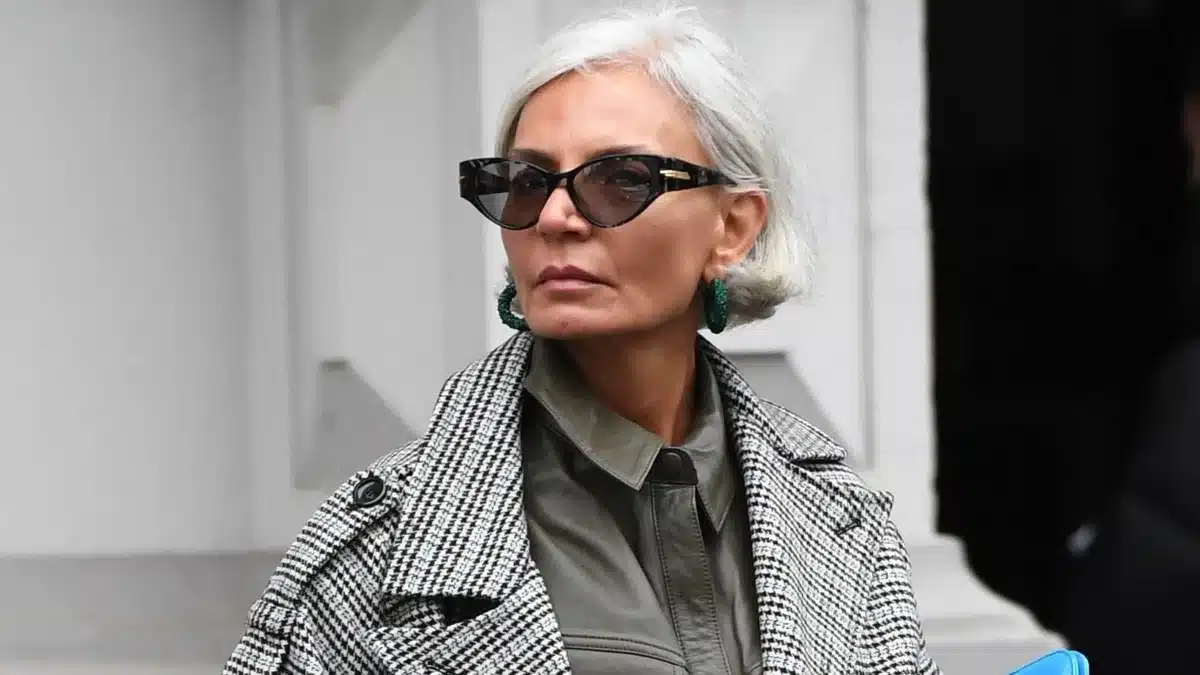
British hairdresser Krysia West, interviewed by Harper's Bazaar UK, is categorical: the best haircut for gray hair after 50 is the bob. Described as "timeless, elegant and incredibly flattering," this cut brings structure, freshness, and radiance to silver hair — provided it's chosen to suit the texture and face shape.
Gray hair after 50 is a choice that more and more women are embracing fully. But embracing your silver strands is one thing — making them work for you is another. The cut you wear has a direct impact on how your face reads: the right one illuminates your features, while the wrong one can harden them or leave you looking tired. Structure, as Krysia West puts it, matters "more than ever" once hair turns gray.
And the answer, according to this British expert, is almost always a variation of the same base: the bob.
The bob is the best haircut for gray hair after 50
The bob isn't just a classic. For gray hair specifically, it functions as a precision tool. Krysia West explains that the cut works by playing on "balance and framing" — two principles that become especially relevant when hair loses pigment and can start to feel flat or heavy depending on its texture.
The reason the bob works so well on silver hair is structural. Gray hair tends to behave differently from pigmented hair: it can grow coarser, more wiry, or conversely thinner, depending on the individual. A well-executed bob accounts for that texture and uses it. The result is a look that appears intentional, polished, and — crucially — fresh.
Gray hair can actually become thicker with age for some women. Choosing the right bob variation depends on your specific texture — not just your face shape.
Why framing matters more with silver hair
Color does a lot of the heavy lifting in a haircut. When it's gone — replaced by silver, white, or a mix of both — the shape of the cut has to carry that weight alone. A bob that's well-placed around the face creates a natural frame, drawing attention upward and softening the jawline. Without that structure, gray hair risks blending into the complexion rather than contrasting with it.
West's core principle here is clear: the bob doesn't just style the hair. It sculpts the face.
The bob as a versatile base for gray hair styles
What makes the bob particularly suited to women over 50 is its range. It's not one haircut — it's a family of cuts, each adapted to a different hair type, lifestyle, and level of boldness. From the sleek blunt bob to the French bob to the asymmetric cut, the variations are wide enough to suit almost any profile. If you're curious about which hair trends are taking over this spring, the bob family remains central to the conversation.
How to choose the right bob variation for your texture
Not all gray hair is the same, and Krysia West is precise about which variation suits which texture. The recommendations she gives follow a clear logic: work with the hair you have, not against it.
For finer hair, a layered bob is the go-to. The layers add movement and dimension, preventing the hair from looking limp or flat. This works particularly well for women whose hair is naturally wavy or slightly textured, as the layers enhance what's already there rather than flattening it.
For thicker hair — and gray hair can indeed become thicker with age — a sleek, blunt bob is the stronger option. The clean line creates definition and avoids the puffiness that can come from too many layers on dense hair. A uniform gray color pairs especially well with this style, making the blunt bob look ultra-modern and intentional.
For women who want to keep some length, a layered cut with disciplined ends offers the best of both worlds: volume, movement, and the longer silhouette without the shapelessness that can come from letting gray hair grow unchecked.
- Layered bob: adds volume and dimension to fine or wavy gray hair
- Blunt bob: sleek and modern for thick, uniform gray hair
- French bob: bold, structured, ideal for those who want to make a statement
- Asymmetric cut: edgy and contemporary for women ready to experiment
- Layered long cut: maintains length while disciplining the ends
- No defined shape: risks a tired, undefined appearance
- Too many layers on thick gray hair: can create unwanted volume and puffiness
- Ignoring texture: a cut chosen for aesthetics alone, without considering hair behavior, rarely delivers
For the bold: the French bob and asymmetric cuts
Women who want to go further than a classic bob have two strong options. The French bob — shorter, blunter, often cut just below or at the chin — gives gray hair a sharp, almost graphic quality. It's the kind of cut that reads as a deliberate style choice rather than a default. Paired with silver or white hair, it has a genuine visual impact.
The asymmetric cut takes that logic even further. One side longer than the other creates movement and a modern edge that can be surprisingly youthful. It's not a cut for everyone, but for women who are ready to own their gray hair as a style statement rather than simply accept it, it delivers. This aligns well with the broader approach of choosing colors and styles that actively rejuvenate the face after 50 — the idea that hair after a certain age should be an asset, not an afterthought.
Both options, West notes, can be personalized to enhance your specific shade of gray and overall style. The cut is never just a shape — it's a frame for everything else.
The real principle behind every good cut for gray hair
Behind all of West's specific recommendations lies one consistent idea: gray hair demands intentionality. A cut chosen without considering texture, face shape, and the specific behavior of silver hair will always fall short, no matter how fashionable it looks on someone else.
The bob — in all its variations — succeeds because it applies structure where gray hair needs it most: around the face, at the ends, and in the overall silhouette. It's a cut that can be read as classic or contemporary depending on how it's executed, which is exactly why it has remained relevant across decades. And if you're also thinking about how your hair color choice affects your overall look after 50, the shape of your cut is the foundation everything else builds on.
Gray hair after 50 isn't a limitation. But it does require a different kind of attention. And according to Krysia West, that attention starts with the right bob.