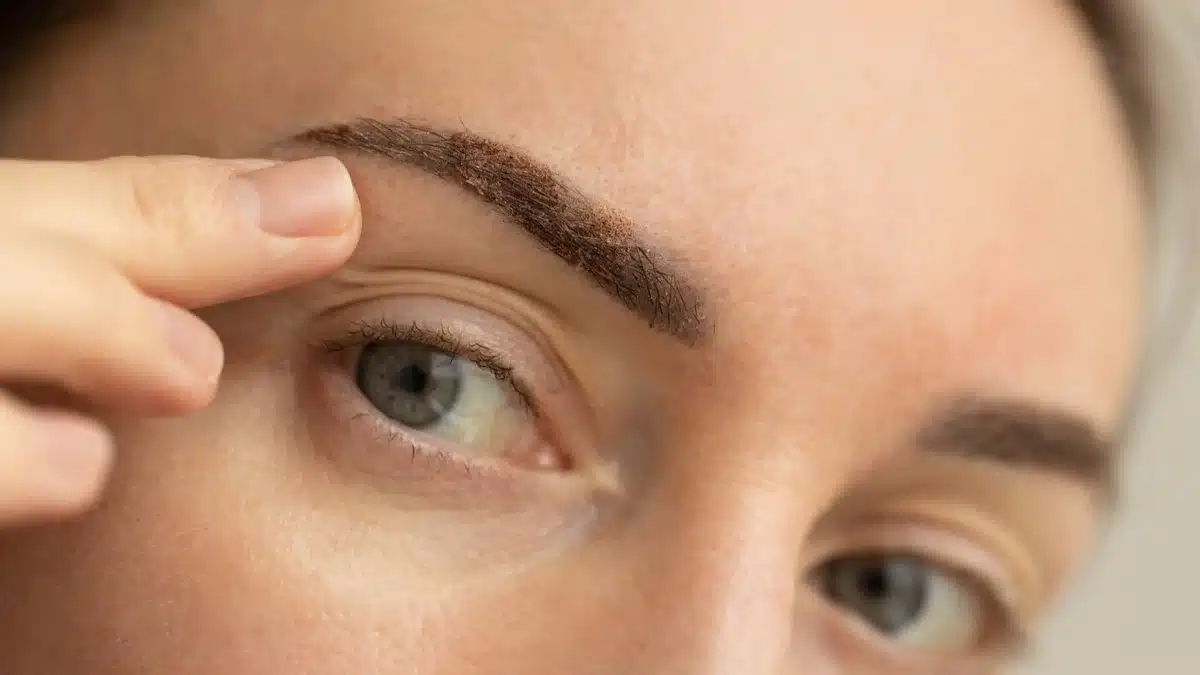
Black eyeliner after 40 is working against you. Makeup pros agree: swapping it for a brown shade is one of the simplest, most effective ways to lift the gaze, soften the features, and visually open the eye. The right shade, applied correctly, can do more for your look than any thick liner ever could.
The logic is straightforward. What worked at 20 — a bold black line, a heavily rimmed waterline — starts to have the opposite effect once skin begins to change. Eyelids lose firmness, the outer corners drift slightly downward, and the delicate skin around the eye becomes more textured. In this context, black eyeliner doesn't frame the eye. It closes it.
Makeup professionals are increasingly vocal about this shift, and the recommendation is consistent: after 40, brown is the color that genuinely flatters.
Black eyeliner after 40 does more harm than good
Why black hardens and closes the eye
The problem with black eyeliner isn't aesthetic preference — it's optical physics. A thick dark line drawn close to the eye absorbs light rather than reflecting it. On a 20-year-old, this creates drama. On skin with more texture and volume changes, it deepens shadows, makes the eye appear smaller, and adds visual weight to features that may already look tired.
Applied inside the waterline or mucous membrane, the effect is even more pronounced. Instead of making the eye look larger, black in this area closes it from the inside, visually shrinking the aperture and accentuating any puffiness or darkness already present.
The result is a look that reads as fatigued rather than defined. And no amount of mascara compensates for a liner that's fundamentally working against the eye's natural shape.
How aging changes the eye area
After 40, the eyelid often becomes slightly heavier. The outer corner of the eye can appear to drop. Fine lines on the lid make liquid liner harder to apply cleanly and, once applied, cause it to settle into creases within hours. A perfectly drawn line at 8 a.m. looks fragmented by noon. This is exactly why women over 40 are rethinking their entire makeup approach — the formulas and techniques that worked before simply behave differently on mature skin.
Lining the waterline with black pencil after 40 visually reduces the eye’s size and intensifies the appearance of dark circles. Swap it for a beige or nude pencil to open the gaze immediately.
Brown eyeliner is the real anti-aging shade for the eye
The visual effects of switching to brown
Brown eyeliner doesn't just look softer — it actively changes how the eye reads. Because it sits closer to the natural spectrum of warm skin tones and hair colors, it blends rather than contrasts. The eye appears elongated rather than rimmed. The gaze looks lifted rather than weighted down. And the overall impression is one of freshness rather than fatigue.
Lancôme's The Feline Flick in Super Brown is one product that makeup artists point to in this context. Its formula allows for a precise yet buildable line — fine enough to stay elegant, warm enough to flatter without hardening the features.
Brown also brings warmth to the face, which is particularly valuable after 40, when the complexion can lose some of its natural radiance. Where black can make the skin around the eye look dull by contrast, a well-chosen brown shade actually wakes up the teint. It attentuates signs of fatigue rather than emphasizing them.
Choosing the right shade of brown for your eye color
Not all browns work the same way, and the most flattering choice depends on your natural eye color:
- Blue eyes: a bronze or copper-toned brown amplifies the cool tones of the iris and creates a warm contrast
- Green or grey eyes: a reddish brown brings out the complexity of these eye colors without overpowering them
- Brown eyes: a chocolate or tobacco brown deepens the look while keeping it harmonious and natural
This kind of personalization is part of what makes the switch from black to brown feel like a real upgrade rather than a compromise. And if you're not ready to abandon black entirely, professionals suggest reserving it exclusively for the lashes, or gradually blending it with brown until the transition feels natural.
The right application technique makes all the difference
Drawing a line that lifts instead of droops
The shade is only half the equation. Where and how you draw the line determines whether it opens or closes the eye. The key rule: start from the middle of the upper lash line and draw toward the temple, finishing with a very slight upward flick. This counteracts the natural downward drift of the outer corner and creates a subtle lifting effect without looking theatrical.
The line itself should be fine. A thin line at the upper lash line defines without overwhelming. The goal is to mimic the density of the lashes, not to add a separate graphic element to the eye.
On lids with visible texture or fine lines, liquid liner becomes an enemy. The better option is a matte brown eyeshadow applied with an angled brush, blended softly along the lash line. This technique follows the contours of the lid instead of fighting them, and the slightly diffused edge looks intentional rather than smudged.
Opening the eye from the inside out
While the upper lash line is where brown liner does its lifting work, the waterline has its own role to play. Lining the mucous membrane with a beige or nude pencil creates the illusion of a larger, brighter eye. The effect is subtle but immediate: the white of the eye appears more expansive, and the gaze looks more awake.
This two-step approach — brown on the upper lash line, nude on the waterline — is one of the most efficient eye-opening combinations available without filters or lighting tricks. For anyone already exploring techniques that rejuvenate the face without invasive procedures, this liner swap is a logical and immediate addition to the routine.
Upper lash line: fine brown liner or matte brown shadow blended with an angled brush, starting from the center and lifting toward the temple. Waterline: nude or beige pencil to visually enlarge the eye. Skip black entirely, or limit it strictly to mascara.
The broader picture here is that eye makeup after 40 isn't about doing less — it's about doing differently. Brown eyeliner, applied with intention, delivers definition, warmth, and lift simultaneously. It works with the eye's evolving shape rather than against it. And unlike many beauty adjustments that require significant investment or effort, this one costs nothing but a willingness to put the black pencil down. The payoff, according to professionals who see it daily, is a gaze that looks genuinely more rested, more open, and more alive — which, at any age, is exactly the point.