Jet black hair color is the single shade that hairdressers most consistently flag as aging for women over 50. According to colorist Jennifer Korab, cited in Glam magazine, uniform raven black hardens facial features, drains the complexion, and creates a contrast so stark it adds years rather than subtracting them. The fix exists, and it starts with understanding why this particular color turns against you after a certain age.
There is something deeply understandable about the impulse. Women who spent their thirties and forties with rich, dark hair look back at old photographs and want to recapture exactly that. Others simply want to cover white hair completely, and black seems like the most definitive solution. Both instincts are logical. But after 50, the skin itself has changed, and what worked at 35 can actively work against you today.
Jet black hair ages women over 50 for one precise reason
Skin loses pigmentation with age. The complexion becomes lighter, sometimes more uneven, and the underlying warmth that once balanced a very dark hair color gradually fades. When you place jet black, uniform color against that evolved skin tone, the contrast becomes brutal rather than striking. Jennifer Korab explains that this particular shade absorbs light instead of reflecting it, which means the face loses its natural relief and dimension.
What happens to the complexion under raven black
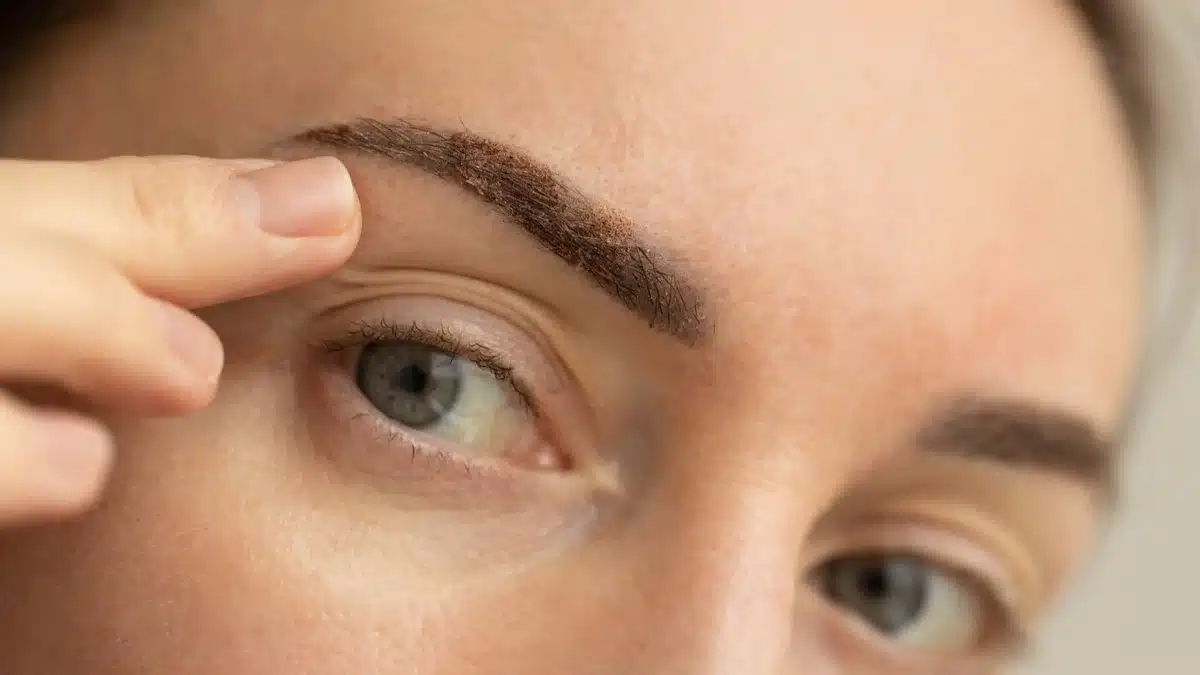
The consequences are visible and cumulative. The area around the eyes darkens, creating a permanent look of fatigue that no concealer fully corrects. The skin reads as paler, sometimes with a yellowish cast. The overall effect is a face that appears drawn rather than defined. This is not a question of opinion or style preference — it is a direct optical consequence of placing a light-absorbing, high-contrast color next to skin that no longer has the pigment density to hold its own against it.
And the hair itself suffers too. Jet black dye applied uniformly tends to make strands look flatter and thinner, eliminating the natural movement that gives hair life. Worse, white roots grow back fast and form a sharp, visible line at the parting — a stark horizontal bar that can even suggest thinning or sparse areas where none actually exist.
Uniform jet black dye is one of the fastest-growing colors at the roots. White hair can become visible within two to three weeks, creating a sharp contrast line that emphasizes the regrowth and draws attention to the parting.
The hair colors that actually flatter women over 50
The good news is that dark hair is not the problem. Very dark hair, done right, remains one of the most elegant and sophisticated choices at any age. The issue is uniformity and extreme depth. Deep, luminous brunette shades — chocolate, glacé chestnut, warm mahogany — work precisely because they carry dimension. They reflect light rather than swallowing it, and they interact with mature skin in a way that reads as vibrant rather than severe.
Hairdressers like Korab recommend adding caramel or mocha highlights to a brunette base, and specifically requesting a face-framing luminous balayage. This technique places lighter, warmer tones around the face — the area that matters most for how a color reads in person and in photographs. The result is a softening effect that opens the features rather than closing them down.
If you're curious about which specific cuts complement these color strategies, the best haircut choices for gray and dark hair after 50 follow similar logic: dimension and movement beat uniformity every time.
Shades to avoid during the transition
Not every alternative is a good one. Very pale blonde and very cool gray are also flagged as problematic during a color transition, particularly when the skin undertone is warm or neutral. These shades can create a washed-out effect that mirrors the very problem you are trying to solve. The goal is a nuanced, intermediate tone matched to your specific complexion — not simply a lighter version of what you had.
It's worth noting that Penélope Cruz's coloring approach after 50 applies exactly this principle: warm, dimensional brunette tones that frame the face without creating harsh contrast.
How to transition away from jet black hair safely
Leaving uniform black hair dye behind is not a single-appointment process. The transition requires patience and professional guidance, and skipping either of those elements carries real risk.
The recommended approach is to lighten the color gradually, using fine highlights spread across several salon appointments. This method allows the hair fiber to adjust progressively, avoids the shock of a sudden dramatic change, and produces a result that looks intentional rather than unfinished. During the process, the lengths need consistent nourishing treatments to compensate for the stress of lightening.
Going from jet black to light brunette with at-home bleaching products in a single session risks serious damage to the hair fiber. This transition must be done in a salon, in stages.
The parallel with makeup is direct. Just as ditching harsh black eyeliner after 40 in favor of softer, warmer tones lifts the gaze and softens the overall look, moving away from jet black hair toward a warmer, more nuanced brunette produces the same kind of lightening effect across the entire face.
Choose deep brunette shades with warmth (chocolate, glacé chestnut). Add caramel or mocha highlights. Request a face-framing balayage. Transition from black gradually, in salon, over multiple appointments. Nourish the lengths throughout.
The broader principle that hairdressers consistently apply after 50 is this: color should work with the current complexion, not against it. Jet black, however flattering it once was, creates a contrast the skin can no longer support. A warm, dimensional brunette does the opposite — it reflects light back toward the face, softens the features, and produces the kind of natural-looking result that makes people say you look well-rested rather than trying too hard. And that, ultimately, is what good hair color is supposed to do.