Black eyeliner after 40 doesn't just feel outdated — it actively works against you. Makeup professionals increasingly point to brown eyeliner as the anti-aging alternative that opens up the gaze, softens features, and brings warmth back to the face. The switch is simple, but the results are striking.
Somewhere between 20 and 40, the rules of eye makeup quietly change. The thick black liner that once defined a bold, youthful look starts doing the opposite: it closes off the eye, deepens shadows, and adds years to a face that has naturally evolved. Skin loses some elasticity, eyelids begin to drop slightly, and the sharp contrast of black against mature skin can harden rather than enhance.
But giving up eyeliner entirely isn't the answer. Switching shades is.
Brown eyeliner is the real anti-aging upgrade
The shift from black to brown eyeliner is one of those adjustments that sounds minor but delivers a visible difference. Where black draws a hard boundary and emphasizes every fold or droop, brown works with the eye's natural contours. It defines without dominating. Makeup experts consistently recommend it for anyone navigating eye makeup after 40 because it does three things simultaneously: it elongates the eye visually, softens the overall expression, and adds warmth that counteracts signs of fatigue.
Lancôme's The Feline Flick in Super Brown is one product that has gained attention in this context, offering a precise application that suits the technique described below. But the brand matters less than the principle: the shade of brown you choose should be adapted to your eye color for maximum effect.
Matching the right brown to your eye color
This is where the approach becomes genuinely personalized. Brown isn't a single shade, and the right choice depends on what you're working with:
- Blue eyes benefit most from a bronze or copper brown, which creates a warm contrast that makes the iris pop.
- Green or grey eyes are enhanced by a reddish brown, a tone that amplifies the cool or earthy tones already present.
- Brown eyes read best with a chocolate or tobacco brown, which adds depth without losing definition.
The logic is the same across all three: you're choosing a brown that creates enough contrast to define the eye while remaining harmonious with your natural coloring.
The application technique that lifts the gaze
Choosing the right shade is only half the equation. How you apply it matters just as much, especially when dealing with the specific concerns that come with eye makeup after 40, including fine lines on the lid, reduced lid space, and the tendency for the outer corner to descend.
Thin line, strategic angle
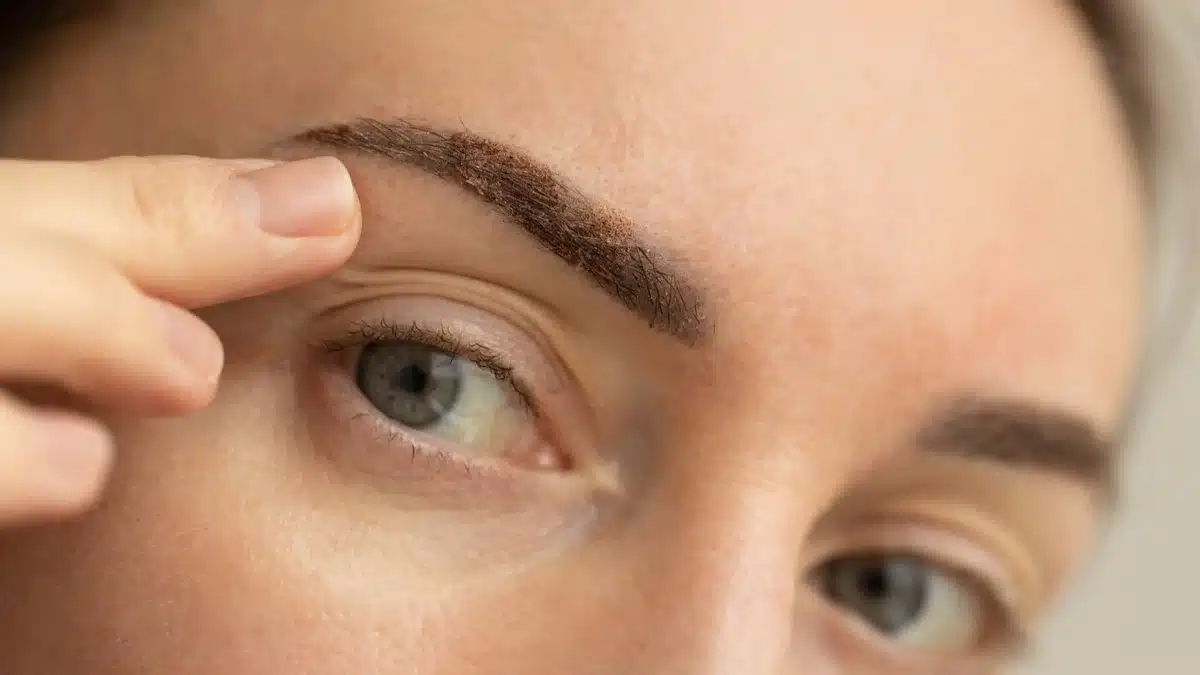
Professionals recommend starting the line from the middle of the upper lash line, not the inner corner. Draw outward and angle the line slightly upward toward the temple. This single adjustment counteracts the drooping effect that a horizontal or downward-sloping line would create. The line itself should be fine and close to the lashes — not a thick band, which adds weight and closes the eye.
For anyone with visibly textured or lined lids, a matte brown eyeshadow applied with an angled brush and lightly blended is a better option than liquid liner. It delivers definition without settling into creases or emphasizing texture. If you're interested in how this technique connects to broader approaches for mature lids, the advice around smoky eye on mature skin follows a similar logic of blending over precision.
The waterline trick that opens everything up
The waterline, or mucous membrane, is often lined with black pencil out of habit. But black on the waterline after 40 does exactly what you don't want: it reduces the visible white of the eye, making the whole eye appear smaller and more closed. The fix is straightforward. Replace black with a beige or nude pencil on the lower waterline. The effect is immediate — the eye appears larger, more rested, and more open.
A nude or beige waterline pencil is one of the fastest ways to make eyes look bigger and less tired — no additional product needed. It works particularly well paired with brown upper liner.
What to do if you can't let go of black
Not everyone is ready to abandon black entirely, and that's a legitimate position. The good news is that there's a middle path. Makeup professionals suggest keeping black exclusively on the lashes rather than the lid — mascara, in other words, remains fair game. The lashes can handle the contrast; the lid skin cannot, at least not in the same way it could at 20.
The other option is a gradual transition: mix brown and black liner, starting with a predominantly brown line and adding just a touch of black at the outer corner for depth. Over time, the eye adjusts to the softer definition and the brown takes over naturally. This approach works well for those who find the change too abrupt visually.
- Visually elongates and opens the eye
- Softens features and reduces the appearance of fatigue
- Adds warmth and revives the complexion
- Works with mature lid texture rather than against it
- Hardens facial features
- Deepens shadows and emphasizes drooping lids
- Shrinks the visible eye area
- Can settle into fine lines and look uneven
This kind of incremental adjustment is part of a broader rethinking of makeup habits as skin evolves. The same principle applies beyond eyeliner — if you're navigating other areas of your routine, makeup tips for women over 60 extend this logic to foundation, blush placement, and lip color in ways that are equally practical.
The underlying principle across all of it is the same: contrast and definition remain the goal, but the tools and intensities need to evolve with the face. Brown eyeliner isn't a compromise. It's a more sophisticated version of what black was trying to do all along.