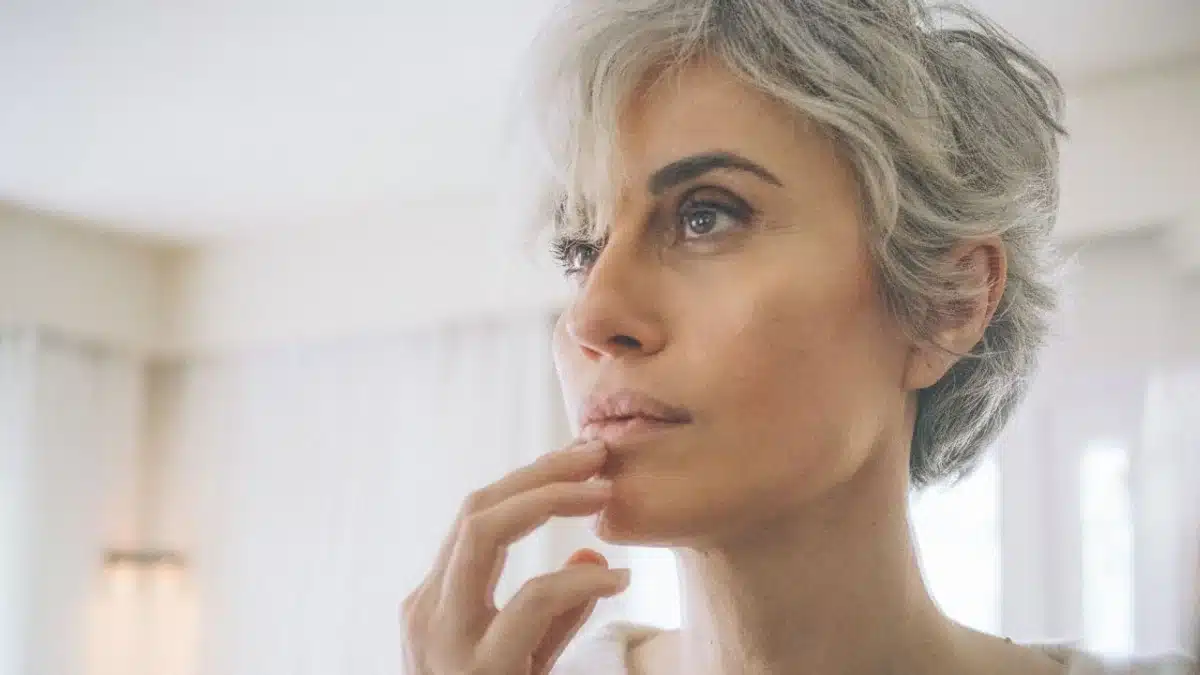
The smoky eye on mature skin doesn't have to mean compromise. Makeup artist Charly Salvator has developed a 7-step technique specifically designed for drooping eyelids and aging skin, built around one central principle: work with the eye's natural shape, not against it.
The smoky eye has been a makeup staple since the 1990s. Icons like Bella Hadid, Zoë Kravitz, and Emily Ratajkowski have kept it firmly in the cultural spotlight. But for anyone dealing with hooded or drooping eyelids, mature skin, or fine lines around the eye area, the classic approach often backfires, creating a heavy, dated look rather than the sultry effect it promises. Charly Salvator, a makeup artist and TikTok creator at @charlysalvator, shared a detailed tutorial titled "ASTUCES ET TECHNIQUES POUR UN SMOKY EYES INRATABLE SUR PEAUX MATURES ET PAUPIÈRES TOMBANTES" that reframes the entire approach to this iconic eye look.
The real reason smoky eyes fail on mature skin
Before diving into technique, understanding why the standard smoky eye goes wrong is half the battle. The problems are consistent and predictable.
Powder formulas and the fine line trap
Heavy powder eyeshadows are the first culprit. Applied too thickly, they settle directly into fine lines and wrinkles, accentuating every crease rather than disguising it. The result is the opposite of what most people want: texture becomes more visible, not less. Cream formulas, by contrast, blend more naturally into the skin, move with it rather than sitting on top of it, and are far less likely to migrate into ridules throughout the day. This is why Charly Salvator builds his entire technique around cream products for the foundational steps.
Dark pigment placement and the panda effect
The second major pitfall is misplaced dark pigment. On drooping or hooded eyelids, spreading a deep color across the entire mobile lid makes the eye appear smaller and heavier. Worse, applying too much dark product outside the lash line zone is the primary cause of the dreaded "panda effect," where pigment migrates into the under-eye area and creates dark smudges that read as fatigue rather than drama. The fix isn't avoiding dark shades entirely. It's controlling exactly where they go.
On drooping eyelids, dark eyeshadow spread across the full mobile lid visually closes the eye and amplifies heaviness. Keep intensity concentrated near the lash line and outer corner only.
A 7-step smoky eye technique built for drooping eyelids
Charly Salvator's method doesn't reinvent the smoky eye. It recalibrates it for a different canvas.
Steps 1 to 3: building the base with cream products
Step 1 establishes a neutral foundation: a beige cream shadow (or a shade matched to the skin tone) applied across the entire lid and along the upper lash line. This creates a clean, unified base that prevents fallout and gives subsequent products something to grip.
Step 2 introduces warmth and depth. A brown cream shadow goes onto the mobile lid, blended upward rather than horizontally. This upward blending direction is deliberate: it counteracts the downward pull of a drooping lid, visually lifting the eye rather than dragging it further down. For anyone looking to address signs of aging around the eye area, this directional technique alone makes a significant visual difference.
Step 3 is where the structure comes in. A dark pencil is applied in a circumflex accent shape at the outer corner of the eye, then blended outward and upward. This targeted placement keeps the intensity where it creates lift, rather than where it creates weight.
Steps 4 to 7: intensity, light, and definition
Step 4 focuses on the waterline. A black pencil goes on the lower waterline, with added emphasis at the outer corner and a subtle extension along the lower lashes. This grounds the look without overwhelming it.
Step 5 reinforces the outer portion of the lid with a brown powder eyeshadow, applied only to the external section of the mobile lid. By this point, the cream base is already in place, so the powder layer is thin and controlled, reducing any risk of it settling into fine lines.
Step 6 is arguably the most transformative step for mature or hooded eyes. A light beige shade goes onto the inner corner, beneath the brow arch, and along the upper lash line. This strategic placement of a pale, luminous tone creates the optical illusion of a wider, more open gaze, even on the heaviest or most drooping lids. The same principle applies to other areas of the face: targeted light-reflecting placement is consistently more effective than blanket coverage.
Step 7 completes the look with mascara on both upper and lower lashes, sealing the definition created by the pencil and powder steps.
Always blend upward on drooping lids. Horizontal blending follows the direction of the droop — upward blending counteracts it visually.
The principles behind the technique
What makes this approach more than a simple step-by-step is the underlying logic. Every decision traces back to the same core idea: adapt to the eye's actual shape rather than fighting it.
Cream formulas dominate the early steps because they are inherently more skin-compatible on mature faces. They blend more smoothly, adhere better without looking cakey, and don't accentuate texture the way heavy powders do. This matters especially when the goal is a finish that doesn't settle into fine lines, a concern that extends well beyond eye makeup.
Restraint is the other guiding principle. The technique works precisely because it concentrates dark pigment near the lash line and outer corner, rather than distributing it broadly. The outer corner becomes the focal point of intensity. Everything else serves to frame, lift, or open. The light beige at the inner corner and under the brow isn't decorative: it's structural, creating contrast that makes the eye read as larger and more awake.
And the upward blending direction, repeated at multiple steps, functions as a non-invasive lift. It doesn't add volume where there is none, but it redirects the eye's visual weight in a way that reads as refreshed rather than heavy. For anyone interested in the broader relationship between makeup technique and aging skin, this kind of thoughtful application approach consistently outperforms product-first thinking.
The smoky eye, done this way, stops being a look that mature or hooded eyes have to avoid. It becomes one they can fully own.